

When you smile, laugh, or even talk, your teeth play a big role in how you feel about yourself. A healthy, radiant smile doesn’t just make you look good—it boosts your self-confidence and even impacts your overall well-being. But when teeth are missing due to decay, gum disease, accidents, or aging, it can create more than just a cosmetic concern. Missing teeth can affect chewing, speech, facial structure, and even lead to long-term oral health problems.
This is where dental implants step in as a life-changing solution. Unlike dentures or bridges, implants look, feel, and function just like natural teeth. They not only restore your smile but also contribute to stronger oral health and improved self-confidence.
In this blog, let’s explore in detail how dental implants improve both your oral health and your confidence.
What Are Dental Implants?
Before we dive into their benefits, it’s important to understand what dental implants are.
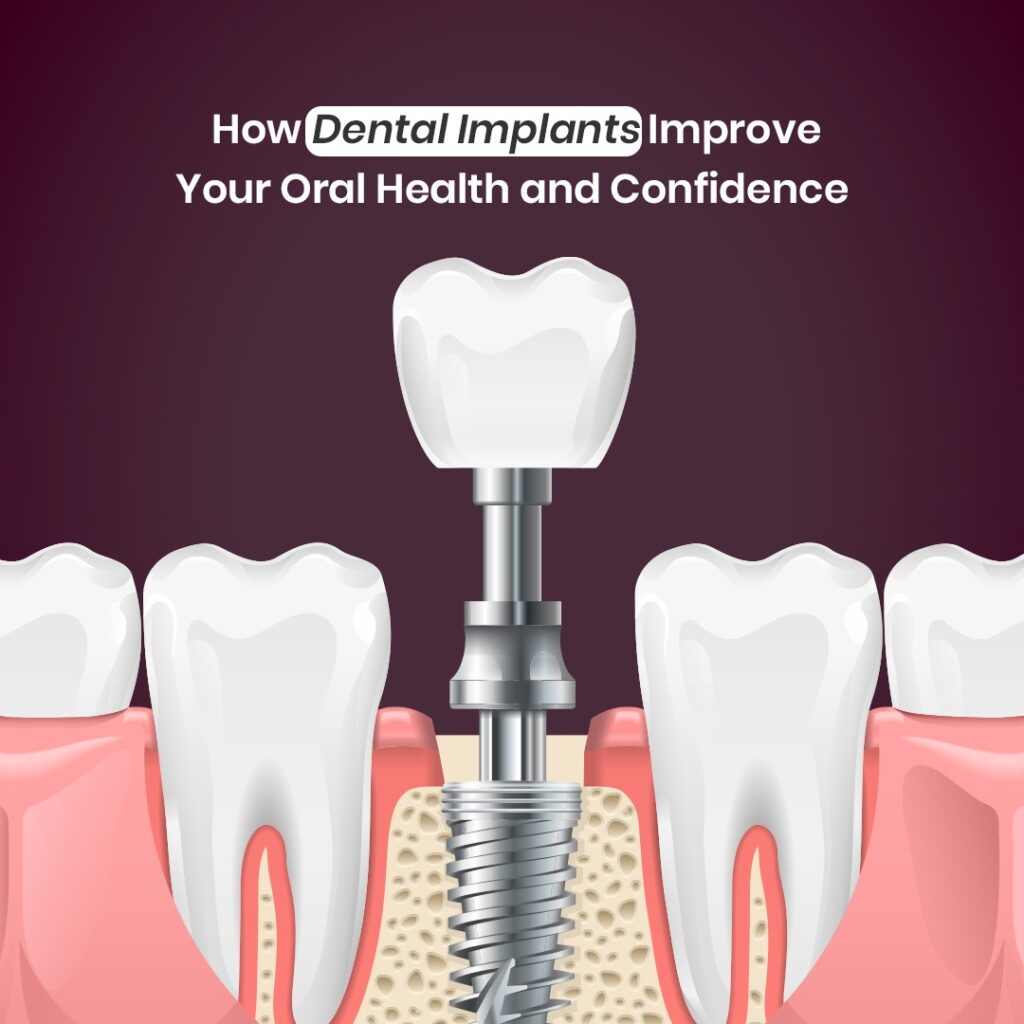
A dental implant is a titanium screw-like post that is surgically placed into the jawbone. This implant acts as an artificial root for the replacement tooth. Once it fuses with the bone through a natural process called osseointegration, a crown (the visible tooth) is attached to the implant.
This process results in a restoration that is:
- Durable
- Natural-looking
- Long-lasting
- Stable enough to handle everyday eating and speaking
Unlike dentures, which may slip, or bridges, which require support from adjacent teeth, implants stand independently and function like real teeth.
How Dental Implants Improve Oral Health
Dental implants don’t just fill gaps in your smile—they play a critical role in maintaining the health of your mouth, jaw, and gums. Let’s look at the different ways they do this.
1. Prevents Bone Loss in the Jaw
When a tooth is lost, the jawbone in that area begins to shrink due to lack of stimulation. This process is known as bone resorption. Over time, bone loss can cause changes in facial structure, making you look older.
Dental implants are the only tooth replacement option that actively prevents bone loss. Since the implant acts like a natural tooth root, it stimulates the jawbone every time you chew, keeping it strong and healthy.
2. Protects Adjacent Teeth
Traditional dental bridges require grinding down healthy teeth to support the bridge. This compromises their strength and increases the risk of future dental issues.
Implants, on the other hand, stand alone. They don’t rely on neighboring teeth for support, which means your natural teeth remain untouched and healthy.
3. Maintains Proper Bite Alignment
Missing teeth can cause surrounding teeth to shift into the empty space, leading to misalignment and bite issues. Misalignment not only affects appearance but can also cause jaw pain, uneven wear, and difficulty in chewing.
By filling the gap, dental implants keep your teeth aligned and maintain a natural bite.
4. Reduces Risk of Gum Disease
Spaces left by missing teeth can become traps for food particles and bacteria, increasing the risk of gum disease. Gum disease, if untreated, can further lead to tooth loss and even affect systemic health.
Implants close these gaps, making it easier to clean your mouth and maintain gum health.
5. Restores Full Chewing Function
Unlike dentures that may slip while eating, implants provide full chewing power. You can enjoy all your favorite foods—nuts, fruits, vegetables, and even tougher foods like meat—without worry. This not only improves oral health but also supports better nutrition and digestion.
How Dental Implants Improve Confidence
Oral health is closely linked with self-esteem. When you lose teeth, you may feel hesitant to smile, laugh, or even speak in social situations. Dental implants restore more than just teeth—they bring back confidence and quality of life.
1. A Natural-Looking Smile
Dental implants are designed to blend seamlessly with your natural teeth. The crowns are customized in color, shape, and size to match your existing teeth perfectly. This makes your smile look complete, natural, and attractive.
2. Improved Speech
Missing teeth or ill-fitting dentures can cause speech difficulties such as lisping or slurring words. With implants, your teeth are securely anchored, helping you speak clearly and confidently without fear of slipping.
3. Confidence in Eating Publicly
People with dentures often feel nervous about eating in public due to the possibility of slipping or discomfort. Dental implants eliminate this worry. Whether it’s biting into an apple or enjoying a steak, implants give you the freedom to eat comfortably in any setting.
4. Long-Term Confidence Boost
Dentures and bridges may need frequent adjustments or replacements, which can feel frustrating. Dental implants, with proper care, can last a lifetime. Knowing you have a permanent solution reduces anxiety and increases long-term confidence in your oral health.
5. Restored Facial Structure
When teeth and bone are lost, the face may appear sunken or aged. Dental implants maintain bone density and facial structure, keeping your appearance youthful and vibrant. This naturally enhances confidence in personal and professional life.
Dental Implants vs. Other Tooth Replacement Options
You might wonder—why choose implants when dentures or bridges are available? Here’s how they compare:
| Feature | Dental Implants | Dentures | Bridges |
| Longevity | 20+ years, often lifetime | 5–7 years | 10–15 years |
| Bone Preservation | Prevents bone loss | No | No |
| Stability | Permanent, secure | May slip or move | Fixed but depends on adjacent teeth |
| Comfort | Feels like natural teeth | Can cause discomfort | Good, but requires tooth modification |
| Appearance | Natural and seamless | May look artificial | Natural but not as flawless as implants |
Clearly, implants stand out as the most reliable and health-focused option.
The Emotional Impact of Dental Implants
Beyond health and appearance, dental implants make a significant difference in how people feel about themselves.
- Social Confidence: Patients often feel more comfortable engaging in conversations, smiling for photos, or attending events.
- Professional Growth: A confident smile can make a positive impression in job interviews, meetings, or presentations.
- Personal Relationships: Being free from embarrassment about missing teeth allows for more openness in personal interactions.
The emotional transformation can be just as powerful as the physical one.
The Dental Implant Procedure: What to Expect
Understanding the process helps reduce fear and makes patients feel more confident about treatment. Here’s a step-by-step overview:
- Consultation & Planning
Your dentist will examine your mouth, take X-rays or 3D scans, and discuss whether implants are right for you. - Implant Placement
The titanium post is surgically placed into the jawbone under local anesthesia. - Healing & Osseointegration
Over the next 3–6 months, the implant fuses with the jawbone. Temporary teeth may be given during this period. - Abutment Placement
Once healed, an abutment (connector) is attached to the implant. - Crown Placement
Finally, a custom-made crown is fitted, completing your smile restoration.
Caring for Dental Implants
Although implants are durable, proper care ensures they last a lifetime. Here are some tips:
- Brush and floss daily, just like natural teeth.
- Visit your dentist regularly for checkups and cleanings.
- Avoid smoking, which can hinder healing and implant success.
- Use a soft-bristled toothbrush to avoid damaging the crown.
- Maintain a healthy diet to support oral and overall health.
Who Is a Good Candidate for Dental Implants?
Most healthy adults with missing teeth are candidates, but dentists typically evaluate based on:
- Healthy gums free from active periodontal disease
- Adequate bone density to support the implant
- Good overall health (conditions like uncontrolled diabetes may require extra care)
- Non-smokers or those willing to quit
Even if you’ve experienced bone loss, procedures like bone grafting can make implants possible.
Final Thoughts
Dental implants are much more than cosmetic fixes. They are investments in oral health, overall well-being, and self-confidence. By preventing bone loss, protecting natural teeth, and restoring full function, they give you the freedom to smile, eat, and live without worry.
If missing teeth have been holding you back—whether in your personal life, professional growth, or health—dental implants could be the key to unlocking a brighter, healthier, and more confident future.