

Losing a tooth can feel like losing a part of yourself. Whether it happens due to decay, gum disease, or an accident, the gap left behind doesn’t just affect your smile—it impacts how you eat, speak, and even how you feel about yourself. For decades, people relied on dentures or bridges to restore missing teeth, but these solutions often came with their own set of challenges. Today, dental implants have transformed tooth replacement into a modern, reliable, and—thanks to advancements in technology—virtually painless procedure.
In this blog, we’ll dive deep into what makes dental implants a game-changer, how the process has become more comfortable than ever, and why they’re considered the gold standard for restoring natural smiles.
What Are Dental Implants?
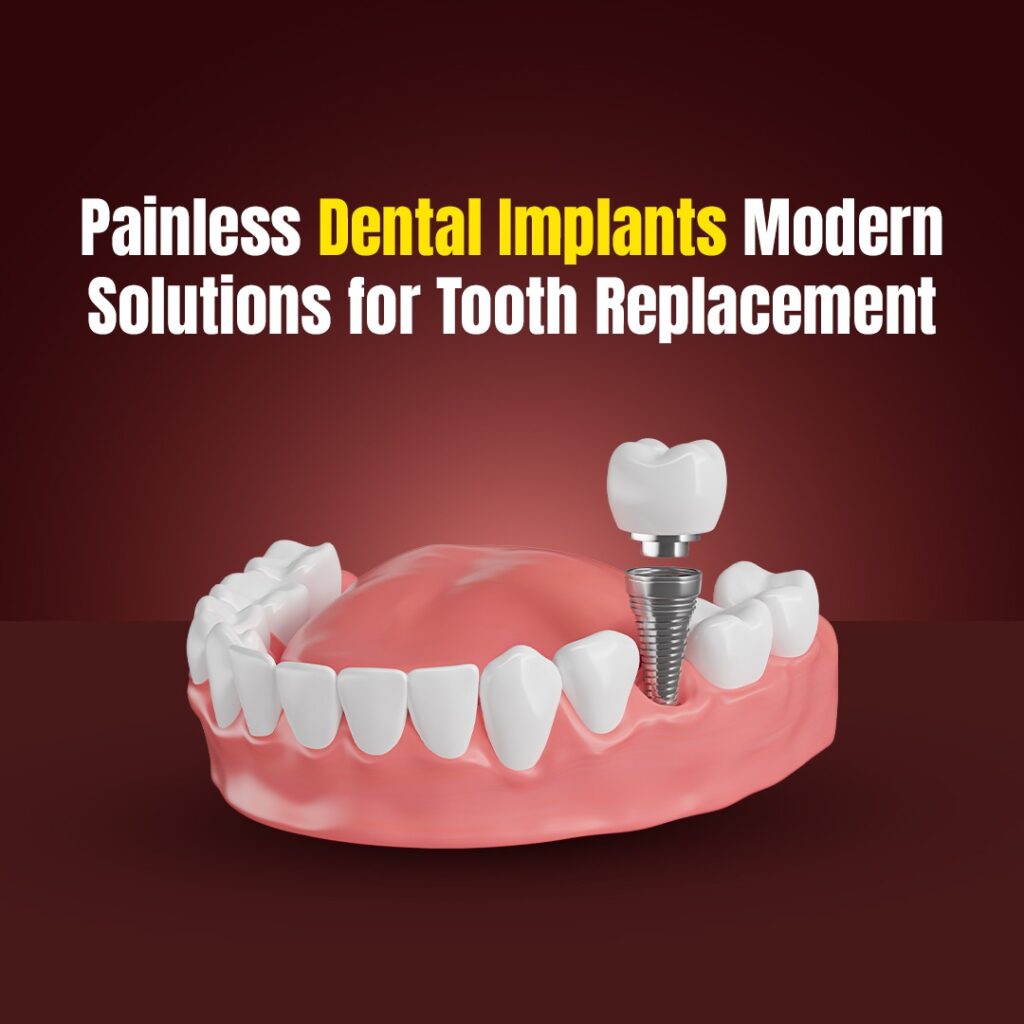
A dental implant is essentially an artificial tooth root made of biocompatible titanium or zirconia. It is surgically placed into the jawbone where it fuses naturally with the bone through a process called osseointegration. Once healed, a crown (the visible part of the tooth) is attached on top of the implant, resulting in a replacement tooth that looks, feels, and functions just like the real one.
Unlike dentures that sit on the gums or bridges that require support from neighboring teeth, implants stand independently. This makes them more durable, natural-looking, and long-lasting.
The Fear of Pain: Breaking the Myth
One of the biggest concerns patients have before getting implants is: “Will it hurt?”
The truth is that modern implant dentistry has come a long way. With advanced techniques, local anesthesia, sedation dentistry, and minimally invasive surgery, the discomfort during and after the procedure is minimal. Most patients report feeling less pain than a tooth extraction.
Why implants are almost painless today:
- Local anesthesia & sedation: Ensures you don’t feel pain during the surgery.
- Computer-guided surgery: Reduces incision size and healing time.
- Improved healing techniques: PRF (Platelet-Rich Fibrin) and laser therapy speed up recovery.
- Efficient tools: High-precision drills and 3D imaging minimize trauma to tissues.
In short, the fear of unbearable pain is outdated. Today, implants are as comfortable as any other common dental procedure.
Why Choose Dental Implants Over Other Options?
When replacing missing teeth, patients often weigh implants against dentures and bridges. Here’s why implants are the superior solution:
- Natural Look & Feel – Implants replicate both the root and crown of the tooth, making them indistinguishable from natural teeth.
- Durability – With proper care, implants can last a lifetime, unlike dentures or bridges that may need replacement every 5–10 years.
- Bone Preservation – Implants stimulate the jawbone, preventing bone loss that usually follows tooth extraction.
- Improved Comfort – No slipping, clicking, or irritation like traditional dentures.
- Better Functionality – You can bite, chew, and speak without restrictions.
- No Damage to Nearby Teeth – Unlike bridges, implants don’t require grinding down healthy adjacent teeth.
Step-by-Step: The Modern Implant Procedure
If you’re considering implants, it helps to know what to expect. Here’s a breakdown of the typical process:
1. Initial Consultation & Assessment
- The dentist evaluates your oral health with X-rays, CT scans, and digital impressions.
- Factors like bone density, gum health, and overall medical history are considered.
- A personalized treatment plan is created.
2. Preparatory Treatments (If Needed)
- Bone grafting may be recommended if your jawbone isn’t strong enough.
- Tooth extraction may be required if a damaged tooth is still present.
- These steps ensure a strong foundation for the implant.
3. Implant Placement Surgery
- Performed under local anesthesia or conscious sedation.
- A small incision is made in the gum, and the implant post is inserted into the bone.
- The gum is stitched back, leaving the implant to integrate with the bone.
4. Healing & Osseointegration
- The implant fuses with the bone over 3–6 months.
- During this period, a temporary crown may be placed for aesthetics.
5. Abutment & Crown Placement
- Once healing is complete, an abutment is attached to the implant.
- A custom crown is fabricated to match your natural teeth and fixed on top.
- The final result is a fully functional, natural-looking tooth.
Is the Recovery Painful?
Most patients are surprised by how smooth recovery is. After the procedure, mild swelling or soreness may occur, but it is manageable with over-the-counter painkillers and cold compresses. Dentists usually prescribe antibiotics to prevent infection and advise a soft diet for the first few days.
Within a week, most people feel almost normal and can resume regular eating habits.
Who Can Get Dental Implants?
Dental implants are suitable for most adults, but certain factors influence eligibility:
✅ Ideal Candidates:
- Healthy gums and adequate jawbone density.
- Non-smokers or willing to quit smoking.
- Good overall health without uncontrolled chronic conditions.
❌ May Need Extra Care:
- Patients with diabetes, heart conditions, or osteoporosis.
- Heavy smokers and those with poor oral hygiene.
- Individuals with severe bone loss (may require grafting before implants).
Consultation with a dentist is crucial to determine the right treatment path.
Advancements Making Implants Truly Modern
What sets modern implants apart from older methods is the integration of technology and minimally invasive approaches:
- 3D Digital Imaging & CBCT Scans – Help dentists plan implant placement with precision.
- CAD/CAM Crowns – Create perfectly fitting crowns in less time.
- Laser Dentistry – Minimizes bleeding and accelerates healing.
- Same-Day Implants – In some cases, patients can walk out with implants and crowns on the same day.
- Zygomatic Implants – For patients with severe bone loss, implants can be anchored into the cheekbone instead of the jaw.
Myths vs. Facts About Dental Implants
Myth 1: Implants are very painful.
Fact: With anesthesia and modern techniques, implants are virtually painless.
Myth 2: Implants are only for the elderly.
Fact: Adults of all ages can benefit from implants if they are medically fit.
Myth 3: Implants look fake.
Fact: High-quality crowns make implants indistinguishable from natural teeth.
Myth 4: Implants require special care.
Fact: Just brush, floss, and visit the dentist regularly—like with natural teeth.
Myth 5: Implants are too expensive.
Fact: Though initially costlier than dentures or bridges, implants last much longer, making them more cost-effective in the long run.
Benefits Beyond the Smile
Dental implants aren’t just about replacing a missing tooth—they enhance overall health and lifestyle:
- Boosts Confidence – No fear of dentures slipping while laughing or eating.
- Better Nutrition – Chewing efficiency improves, allowing you to enjoy a wider variety of foods.
- Speech Improvement – Unlike dentures, implants don’t affect pronunciation.
- Anti-Aging Effect – Preventing bone loss helps maintain facial structure and prevents a sunken appearance.
Caring for Your Dental Implants
The longevity of implants depends on how well you care for them. Fortunately, it’s simple:
- Brush twice daily with a soft-bristle toothbrush.
- Floss or use interdental brushes to clean around the implant.
- Visit the dentist regularly for professional cleanings.
- Avoid smoking, as it slows healing and increases the risk of implant failure.
- Maintain a balanced diet rich in calcium and vitamin D for bone health.
With good oral hygiene, implants can last a lifetime.
Cost of Dental Implants
The cost varies depending on location, clinic, material used, and additional procedures (like bone grafting). While implants may seem more expensive upfront, their durability makes them a one-time investment compared to dentures or bridges that need replacements.
Think of implants as not just a dental treatment but a long-term investment in your health, confidence, and quality of life.
Final Thoughts
Modern dental implants are far more than a cosmetic fix—they’re a life-changing solution. With advanced technology, minimally invasive procedures, and pain-free techniques, implants have become the gold standard for tooth replacement. They restore not only your smile but also your ability to eat, speak, and live with confidence.
If you’ve been avoiding tooth replacement out of fear of pain or discomfort, it’s time to rethink. Today’s dental implants are safe, reliable, comfortable, and virtually painless.
A complete, healthy smile is no longer a dream—it’s a reality within your reach.