

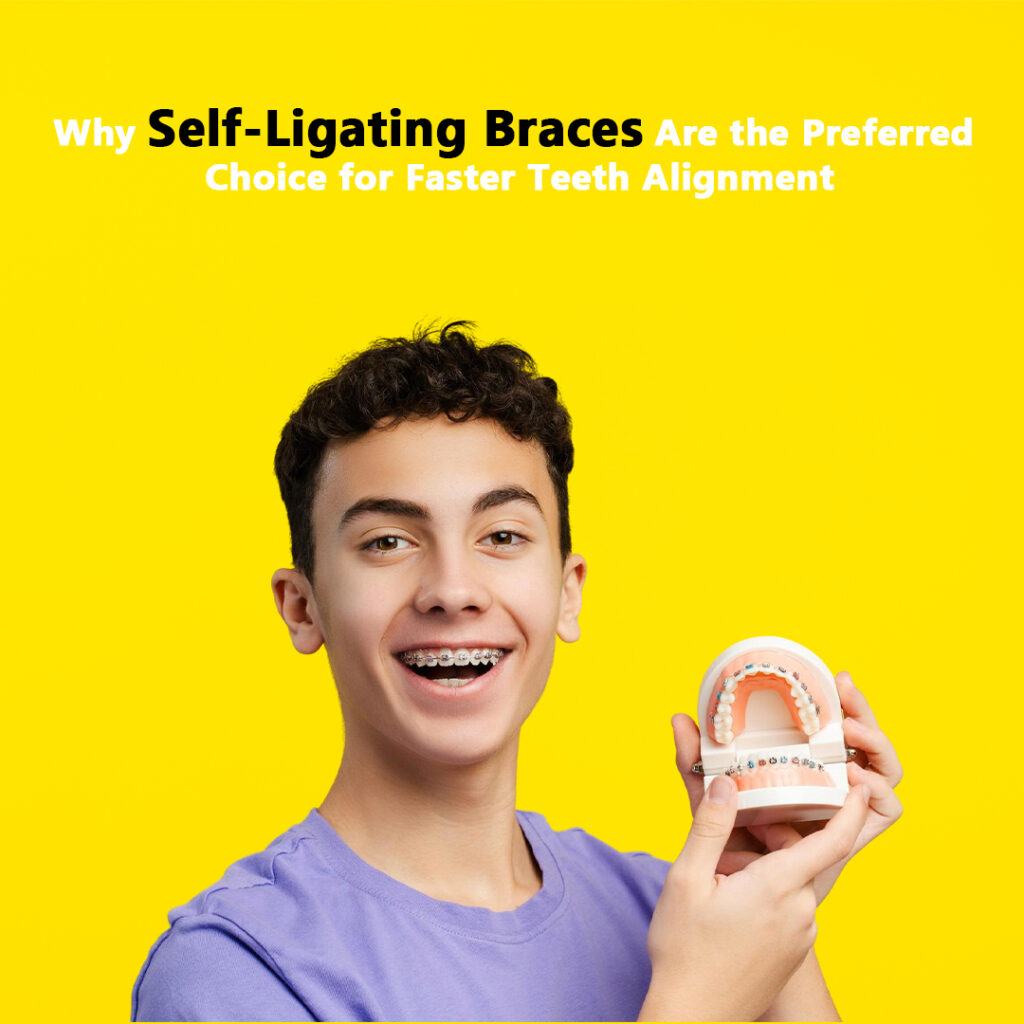
A beautiful, confident smile has the power to transform how we look, feel, and interact with others. But for many people, crooked, crowded, or misaligned teeth stand in the way of that perfect smile. Orthodontic treatment has long been the solution, and traditional braces have been around for decades helping patients achieve straighter teeth. However, advancements in dental technology have introduced newer, faster, and more comfortable options—one of the most popular being self-ligating braces.
In recent years, self-ligating braces have gained significant attention among orthodontists and patients alike. They’re often preferred over traditional braces because they reduce treatment time, require fewer appointments, and offer a more comfortable experience. If you’ve been considering orthodontic treatment, this blog will walk you through everything you need to know about self-ligating braces—what they are, how they work, and why they’re often the top choice for faster teeth alignment.
What Are Self-Ligating Braces?
To understand self-ligating braces, let’s first look at traditional braces. Conventional braces consist of three main parts:
- Brackets: small metal or ceramic pieces attached to each tooth.
- Archwire: the wire that runs through the brackets, guiding teeth into place.
- Ligatures (elastic or metal ties): tiny rubber bands or wires that hold the archwire onto the brackets.
Traditional braces rely on these ligatures to create pressure and gradually move teeth into alignment. While effective, the system has its limitations—it often requires frequent adjustments, can be uncomfortable, and makes oral hygiene more challenging.
Self-ligating braces, on the other hand, eliminate the need for elastic or metal ties. Instead, they use a specialized sliding or clip mechanism built into the bracket itself. This allows the archwire to move more freely while still applying gentle, consistent pressure to the teeth.
There are two main types of self-ligating brackets:
- Active self-ligating brackets – use a clip that applies additional pressure to the archwire.
- Passive self-ligating brackets – use a slide mechanism that holds the wire in place without extra pressure.
Both types are effective, but the key advantage is the reduced friction and more efficient tooth movement compared to traditional braces.
How Do Self-Ligating Braces Work?
The mechanics behind self-ligating braces are simple yet innovative. The specialized bracket design creates a low-friction environment, allowing the archwire to move smoothly as teeth shift into position. This means the system can apply lighter, continuous forces—unlike traditional braces that often rely on strong, periodic adjustments.
Here’s how the process works step by step:
- Your orthodontist attaches self-ligating brackets to your teeth.
- The archwire is threaded through the brackets and secured with the built-in clip.
- As the wire gradually returns to its natural shape, it gently guides the teeth into alignment.
- Over time, the wire is replaced with progressively stiffer wires until the teeth reach the desired position.
Because the system minimizes resistance, teeth can move more efficiently. Patients often notice that their treatment progresses faster and with fewer appointments compared to conventional braces.
Why Self-Ligating Braces Are Preferred for Faster Teeth Alignment
Now that you know how they work, let’s dive into the key reasons why self-ligating braces are often considered the superior choice for achieving straighter teeth in less time.
1. Reduced Treatment Time
One of the biggest appeals of self-ligating braces is the potential for shorter treatment duration. Traditional braces usually require 18–30 months, depending on the severity of misalignment. With self-ligating braces, many patients see results in 12–24 months, sometimes even sooner. The reduced friction between wire and bracket allows teeth to move more efficiently, speeding up the process.
2. Fewer Orthodontic Appointments
Since self-ligating braces don’t use elastic ties, they don’t need to be tightened as often. Traditional braces often require monthly adjustments, but self-ligating systems typically need check-ups every 8–10 weeks. This not only saves time but also makes treatment more convenient for busy individuals, students, or professionals.
3. Greater Comfort
Many patients complain about the discomfort associated with traditional braces, especially after adjustments. Self-ligating braces apply lighter, more consistent forces, reducing soreness and making the experience more comfortable. Without tight elastic bands, there’s also less pressure on teeth and gums.
4. Improved Oral Hygiene
Elastic ties on traditional braces tend to trap food particles and plaque, making it harder to clean your teeth properly. This increases the risk of cavities, gum disease, and staining. Since self-ligating braces don’t use elastics, they are easier to keep clean. Patients often find brushing and flossing less complicated, leading to better oral health during treatment.
5. Better Aesthetics
Self-ligating braces are available in both metal and clear ceramic options. The ceramic version blends more naturally with the teeth, making them less noticeable than traditional metal braces. For patients who are conscious of their appearance, this can be a big advantage.
6. Efficient Results for Complex Cases
While clear aligners (like Invisalign) are popular, they’re not always suitable for complex orthodontic problems such as severe crowding or bite issues. Self-ligating braces can handle mild to complex cases effectively, often providing more predictable and stable outcomes.
7. Less Reliance on Tooth Extractions
Traditional braces sometimes require tooth extractions to create space for alignment. With self-ligating braces, the efficient movement of teeth often reduces or eliminates the need for extractions. This preserves natural teeth and shortens the overall treatment timeline.
Comparing Self-Ligating Braces with Other Options
When choosing orthodontic treatment, patients often compare self-ligating braces with traditional braces and clear aligners. Here’s how they stack up:
| Feature | Traditional Braces | Self-Ligating Braces | Clear Aligners |
| Treatment Time | 18–30 months | 12–24 months (faster) | 12–24 months (depends on compliance) |
| Comfort | Moderate discomfort | More comfortable, less friction | Comfortable but may cause initial soreness |
| Aesthetics | Noticeable (metal or ceramic) | Metal or clear ceramic (less noticeable) | Nearly invisible |
| Oral Hygiene | Harder to clean | Easier to clean | Easy (removable) |
| Appointments | Every 4–6 weeks | Every 8–10 weeks | Every 6–8 weeks |
| Suitable for Complex Cases | Yes | Yes (efficient) | Limited in very complex cases |
From this comparison, it’s clear that self-ligating braces offer the best of both worlds—faster results than traditional braces while still addressing complex dental problems that aligners may not fully manage.
Who Can Benefit from Self-Ligating Braces?
Self-ligating braces are suitable for both teenagers and adults looking to correct dental misalignments. They are particularly beneficial for:
- Patients with crowded teeth who want faster results.
- Adults seeking a more discreet orthodontic solution without committing to clear aligners.
- Individuals with busy schedules who prefer fewer appointments.
- Those concerned about maintaining good oral hygiene during treatment.
Myths and Misconceptions About Self-Ligating Braces
As with any dental treatment, misconceptions exist. Let’s clear a few:
- Myth 1: Self-ligating braces are pain-free.
While they are more comfortable, some mild discomfort is normal as teeth shift. - Myth 2: They work in half the time of traditional braces.
They may shorten treatment by several months, but the duration still depends on the complexity of the case. - Myth 3: They are invisible.
Clear ceramic versions are discreet, but they are not completely invisible like clear aligners. - Myth 4: They are only for adults.
Teens can also benefit greatly from self-ligating braces.
Tips for Getting the Best Results with Self-Ligating Braces
To maximize the benefits of self-ligating braces, follow these tips:
- Maintain excellent oral hygiene – Brush twice daily, floss regularly, and use mouthwash.
- Avoid hard and sticky foods – These can damage the brackets and wires.
- Attend all scheduled appointments – Even though they’re less frequent, check-ups are essential.
- Wear retainers after treatment – To keep your new smile aligned.
- Follow your orthodontist’s instructions carefully – Every case is unique.
The Future of Orthodontics: Why Self-Ligating Braces Are Here to Stay
Orthodontics has come a long way from bulky, painful braces of the past. Patients today want faster, more comfortable, and aesthetically pleasing solutions—and self-ligating braces deliver on all these fronts. With their advanced design, efficiency, and convenience, they represent the future of teeth alignment treatments.
Many orthodontists now recommend self-ligating braces as their go-to system for patients who want quicker results without compromising on effectiveness. While other options like clear aligners are appealing for their invisibility, self-ligating braces remain one of the most versatile and dependable orthodontic treatments available today.
Final Thoughts
If you’ve been putting off orthodontic treatment because of the time, discomfort, or inconvenience of traditional braces, self-ligating braces might be the solution you’ve been waiting for. They offer a combination of faster treatment, greater comfort, improved oral hygiene, and fewer appointments, making them a preferred choice for many patients worldwide.
Ultimately, the best treatment for you will depend on your individual needs, lifestyle, and orthodontist’s recommendation. But with self-ligating braces, you can look forward to achieving a beautiful, straight smile more efficiently than ever before.
A confident smile isn’t just about looks—it’s about feeling good in every aspect of your life. With self-ligating braces, that smile is closer than you think.